

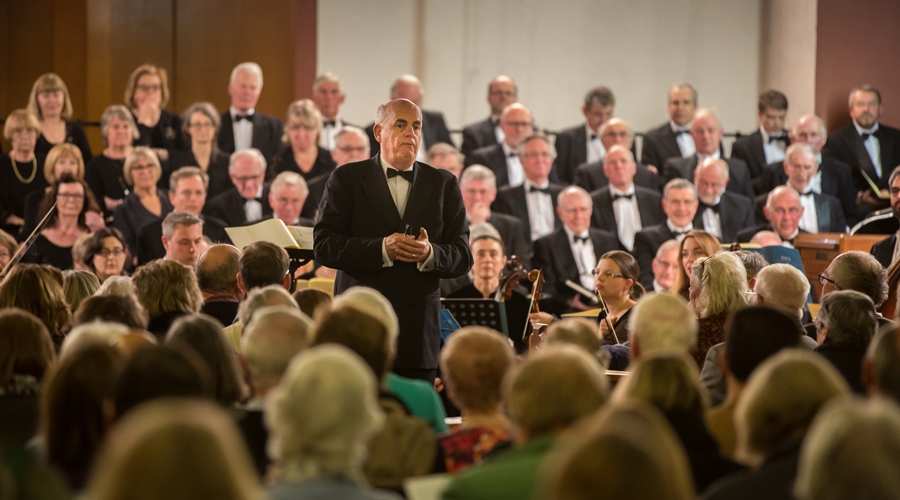
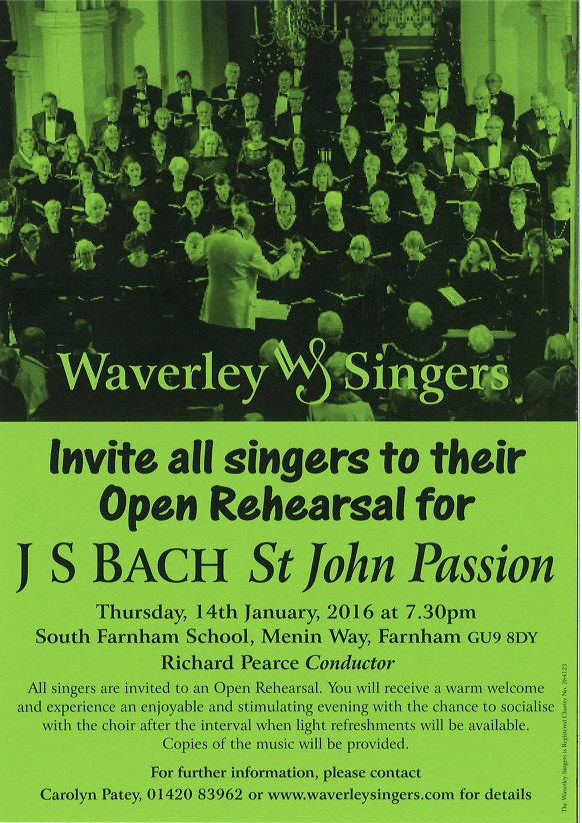
Bach - St. John Passion
Evangelist: Hugh Benson
Christus: Richard Walshe
Soprano: Galina Averina
Alto: Hannah Poulsom
Tenor: John Porter
Bass: Henry Neill
Brandenburg Baroque Soloists
JS Bach: St John Passion
Retiring Collection for the Motor Neurone Disease Association
Reviews
"Singers rise to the demands of St John Passion"
The following review by John Cotterell appeared in the Farnham Herald on 1 April 2016:
The demands on any choir singing JS Bach’s Saint John Passion are high. Between the monumental opening chorus and the strength of the final chorale, the singers have a wide range of music given to them during which they must change character a number of times.
Sometimes they represent the crowd baying for the release of Barabbas or the crucifixion of Christ, sometimes they sympathise with the onlooker reflecting on the appalling, agonising, hopeful and ultimately uplifting aspects of the drama, while also providing occasional discreet support to the soloists, and always remaining an integral part of this great and moving work.
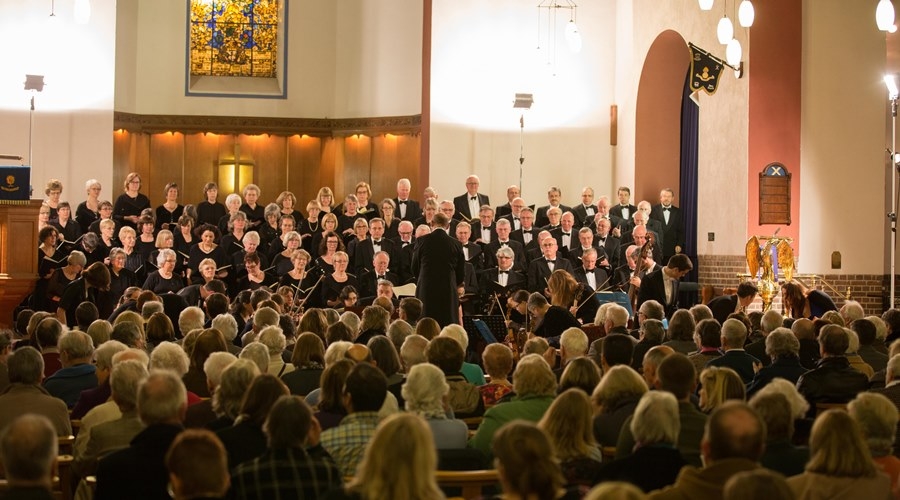
At Saint Andrew’s Garrison Church Aldershot, before a large audience, the Waverley Singers rose to the challenge magnificently under their conductor, Richard Pearce, who drew from them commendable accuracy, focus, solid chording, rhythmic vitality, and clear German pronunciation throughout.
The clarity of all these ingredients was outstanding in the chorus ‘Lasset uns den nicht zerteilen’, where the soldiers cast lots for Jesus’ coat, and the savage outbursts in the scene with Pilate were intense and powerful. A little more variety between the reflecting chorales may have pleased some, but in an overall performance of such quality this is but a small comment.
For a young tenor the role of the Evangelist is a huge undertaking, but on this occasion Hugh Benson, currently in his second postgraduate year at the Royal Academy of Music, gave a most impressive performance, moving the drama forward and holding it back where necessary, and always remaining detached from the emotions which his narrative creates.
His well studied account of all his recitatives was sung with clear and expressive diction and a complete understanding of the music. His connection with the audience in so doing showed distinct promise of a specialist Evangelist for the future.
By his side stood Richard Walshe as Christ. Also a postgraduate student at the Royal Academy, he has a rich and resonant bass voice with which he portrayed the character's firm stature and authority in the early part of the work, and which he used to great effect later when Jesus’ strength was ebbing.
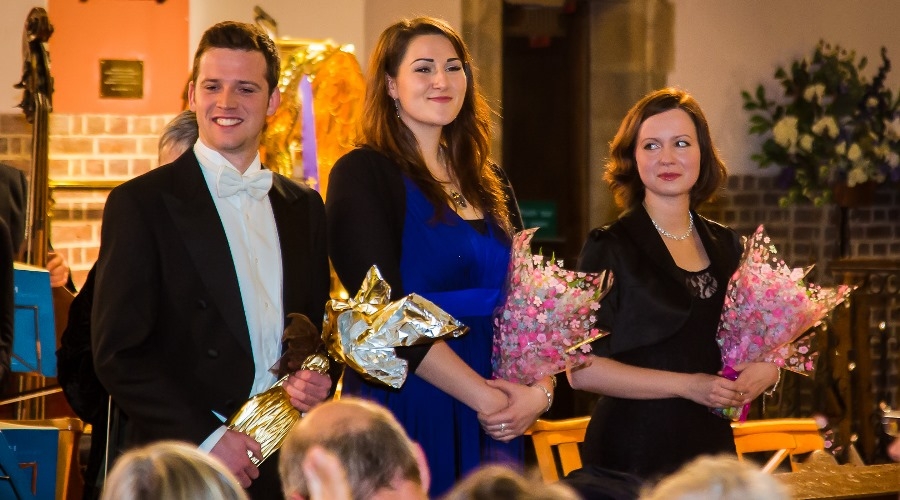
Of the other soloists, Galina Averina (soprano) sang her two contrasting arias with a very clear and bright tone, but sadly remained too tied to her score to engage the audience fully.
Hannah Poulsom (mezzo) took a few moments to settle into her first aria but was then fine, and her subsequent rendering of ‘Es ist vollbracht’ was beautiful. John Porter (tenor) was right to adopt a forthright approach to Peter’s despair in ‘Ach, mein Sinn’, and succeeded well in the difficult, long, grieving aria ‘Erwage, wie sein blutgefarbter Rucken’.
Henry Neill (baritone) not only carried the roles of Peter and Pilate with confidence and conviction, portraying well the latter's reluctance to yield to the accusations against Jesus, but also sang the arias set for him with style and easy phrasing, the Arioso ‘Betrachte, meine Seel’ being entirely memorable.
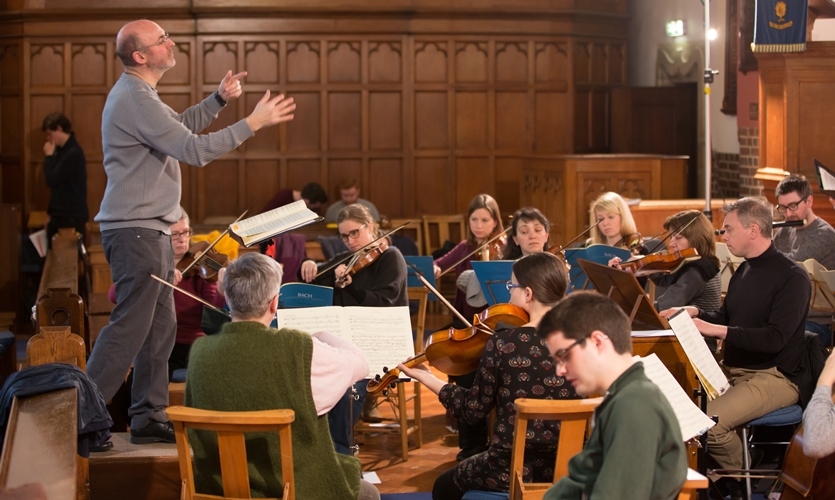
The Brandenburg Baroque Soloists, playing on period instruments to a very high standard, provided the orchestral music. This included some attractive solo work, particularly by the woodwind and gamba players, while the continuo supported all the recitative with skill, sensitivity and apparent ease.
After Mendelssohn’s acclaimed restitution of Bach’s later St Matthew Passion in 1829, it was that work which for the next 100 years or so was accepted as revealing the composer’s genius, with the earlier, more dramatic St John as no more than a runner up. But from half way through the last century, the St John has certainly achieved parity with its larger successor, and the Waverley Singers and Richard Pearce in this splendid performance showed us why.
Gallery


Youtube